Automating Corporate Dinners and Events: AI Handles Everything from A to Z
AI for hospitality events manages quotes, confirmations and follow-ups for corporate dinners without anyone needing to type a manual email.
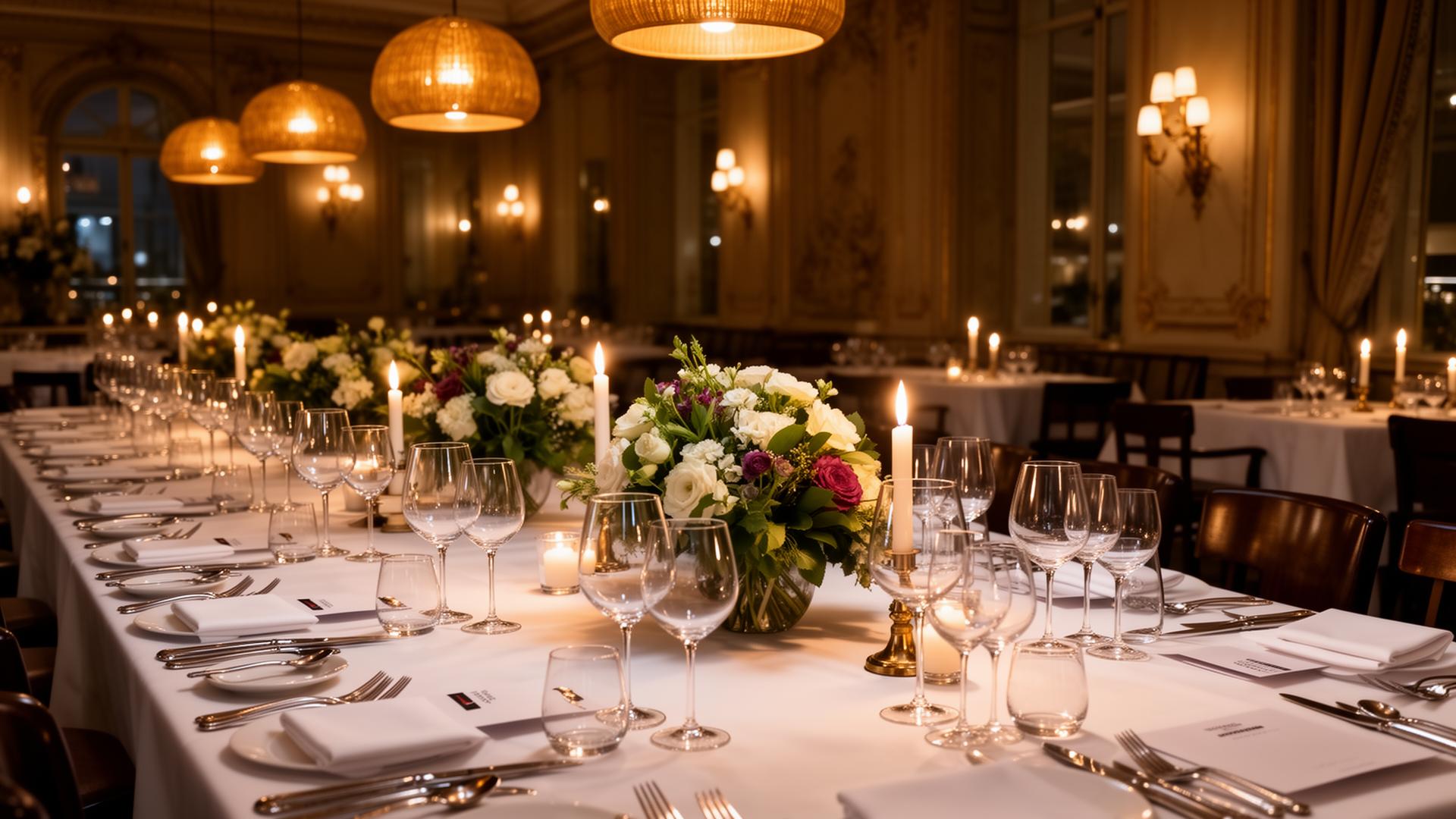
Organising a corporate dinner for 28 people via email often means a chain of 12 to 20 messages back and forth. Guest numbers change, dietary requirements trickle in, a colleague drops out, the billing address needs updating. In practice, this administration usually ends up being handled in the evening by the manager or waiting staff. AI for hospitality events takes over this entire process: from the first request on the website to the evaluation email a week after the event.
In this article we explain how AI for hospitality events works, which steps are fully automated, where human oversight remains, and which measurable benefits operators see in practice. We refer, among others, to data from CBS and guidelines from KHN.
Why AI for hospitality events makes a difference
Event enquiries are the most profitable reservations in a restaurant, but also the most time-consuming. According to our own customer data, one average corporate enquiry costs a manager 45 to 90 minutes spread over several days. With AI for hospitality events this drops to 5 to 15 minutes of human time, concentrated at the moments where judgement really matters: the initial quote check and the final confirmation.
For restaurants hosting multiple events per week, the time savings quickly add up to half a day per week per location. That time can go back to the floor or to hospitality instead of administration.
Which steps AI for hospitality events automates
The process consists of eight steps that the AI carries out almost entirely independently:
- The request comes in via a form, email, phone or WhatsApp and is immediately recorded in a structured way.
- The AI checks availability in the reservation system and suggests alternative dates if necessary.
- Based on pre-defined packages, the AI generates an initial quote with menu, drinks and logistics.
- The manager reviews this quote with a single click and adjusts it if needed for customisation.
- The final quote is sent to the organiser including a link for digital approval.
- After approval, automatic confirmations follow, reminders 7 and 1 day before the event, and a request for dietary requirements and allergens.
- On the day itself, the kitchen and service team receive a structured briefing.
- After the event, an evaluation email is sent automatically and an invoice is prepared.
Where human oversight remains
Two moments deliberately remain human work. First: the initial quote check, because an experienced manager can better judge whether a package suits the type of group. Second: custom requests that fall outside standard packages, such as a group with specific wishes regarding layout or special wines. This ensures that AI for hospitality events never sends an impersonal quote where hospitality is expected.
How no-shows and miscommunication are reduced
No-shows and last-minute changes are the two biggest cost factors in events. AI for hospitality events reduces these risks in four ways: timely reminders with direct buttons to make changes, an automatic request for final numbers 72 hours before the event, a digital approval confirmation that is legally valid, and automatic escalation if the organiser does not respond within 48 hours. In practice, we see the no-show rate for event groups drop from around 8 percent to below 2 percent.
How AI for hospitality events integrates with existing systems
In most cases the AI connects directly with the venue’s reservation system, email program and invoicing system. On platforms with an API this happens in real time. On platforms without an API we use structured email flows as a fallback, so that data always ends up in the right place. We always carry out a short technical check beforehand to avoid promises that cannot later be fulfilled.
What data the AI collects during an event
Only what is necessary to ensure the event runs smoothly: organiser name, contact details, number of guests, dietary requirements, possibly a billing address and a short description of the occasion. Allergen and medical information is stored briefly in accordance with the GDPR and automatically deleted once the event is completed. You can read more about how we handle privacy in our privacy and GDPR explanation.
What the privacy regulator says about event data
Events often bring together data that remains separate in other processes: contact details, billing data, dietary requirements and sometimes guest lists. The Dutch Data Protection Authority explicitly states that this type of data may only be collected for the specific purpose and must not be retained longer than strictly necessary. Our AI for hospitality events implements this principle automatically by restricting access to fields after the event and actively enforcing retention periods.
How this fits within the European AI Act
The European AI Act requires us to make it clear that a guest is communicating with an AI. For event enquiries we include this in the first response via email or chat in clear language, without breaking the professional tone. This builds trust with the organiser and prevents surprises later in the process.
Practical checklist for setting up AI for hospitality events
Three things determine whether implementation runs smoothly: an up-to-date set of packages with pricing logic, a working integration with the reservation system, and internal agreements about who gives the final approval. Operators who have these three elements in place before the AI goes live often see a noticeable effect on administrative workload and response time within two weeks.
Frequently asked follow-up question from operators
Almost every operator asks: how personal does my event remain if AI manages this? The honest answer is that the AI mainly removes administration, not hospitality. The organiser actually experiences greater professionalism through fast responses and clear agreements. The time the manager gains can be used for the personal moments that really matter: the welcome on arrival, the short chat at the table halfway through, or the thank-you at the end. AI for hospitality events shifts effort from administration to guest experience, and that is exactly what our sector is about.
See HorecaHub.ai in your business
In 20 minutes we show live how our AI colleague handles calls, emails and chats from your guests.

Frequently asked questions
Sources
Read also
Written by
Martin Jurres
CCO of HorecaHub.ai
Driven by innovation and hospitality, Martin is building the commercial growth of HorecaHub.ai. With experience in sales, partnerships, and product demos, he translates AI technology into real value for hospitality entrepreneurs. His goal: to make every business run smarter, with less hassle and more profit. On this blog he shares hands-on lessons from conversations with hundreds of restaurants, hotels and cafés.
Topics