Google Maps Optimisation for Hospitality: How AI Increases Your Local Visibility
Google Maps optimisation for hospitality with AI: how a polished Business Profile, review workflow, weekly posts and structured data can deliver 25-45% more profile views.
Google Maps optimisation for hospitality is, in 2026, the difference between a full dining room on Thursday evening and an empty terrace on Saturday. For most restaurants, hotels and cafés, 45 to 65% of new guests now arrive via searches such as "restaurant near me", "hotel Amsterdam city centre" or "best lunch Rotterdam". Businesses that rank highly in local search results and on the map win. AI does not fundamentally change that game, but it does make it realistic to consistently perform well without manually working on it every day.
Want to keep reading? Also see the complete AI customer service guide 2026, voice search and GEO for hospitality or book a free local audit for your business via contact.
Why Google Maps is the most important visibility layer for hospitality
According to Google's own consumer research, more than 80% of all restaurant and hotel searches begin with local intent. Users do not search for "restaurant" but for "restaurant near me open now", and Google primarily answers that query via Maps results (the "local pack"). For hospitality businesses, this channel is now more valuable in most cities than traditional website visibility. Businesses that do not win the local pack miss a large share of spontaneous demand; those that consistently appear in it see the difference reflected in reservations without additional advertising budget.
What Google Maps still uses as the main ranking factors in 2026
Despite yearly algorithm updates, four factors remain decisive for local rankings. Relevance (does your business match the search query in terms of category, dishes, cuisines, facilities). Proximity (how physically close you are). Prominence (number, quality and freshness of reviews plus mentions on other sites). And engagement (clicks, directions, phone calls, photos users interact with directly from your listing). AI can directly contribute to three of these four; proximity is the only one you cannot influence unless you relocate.
The Google Business Profile basics that almost everyone only half does
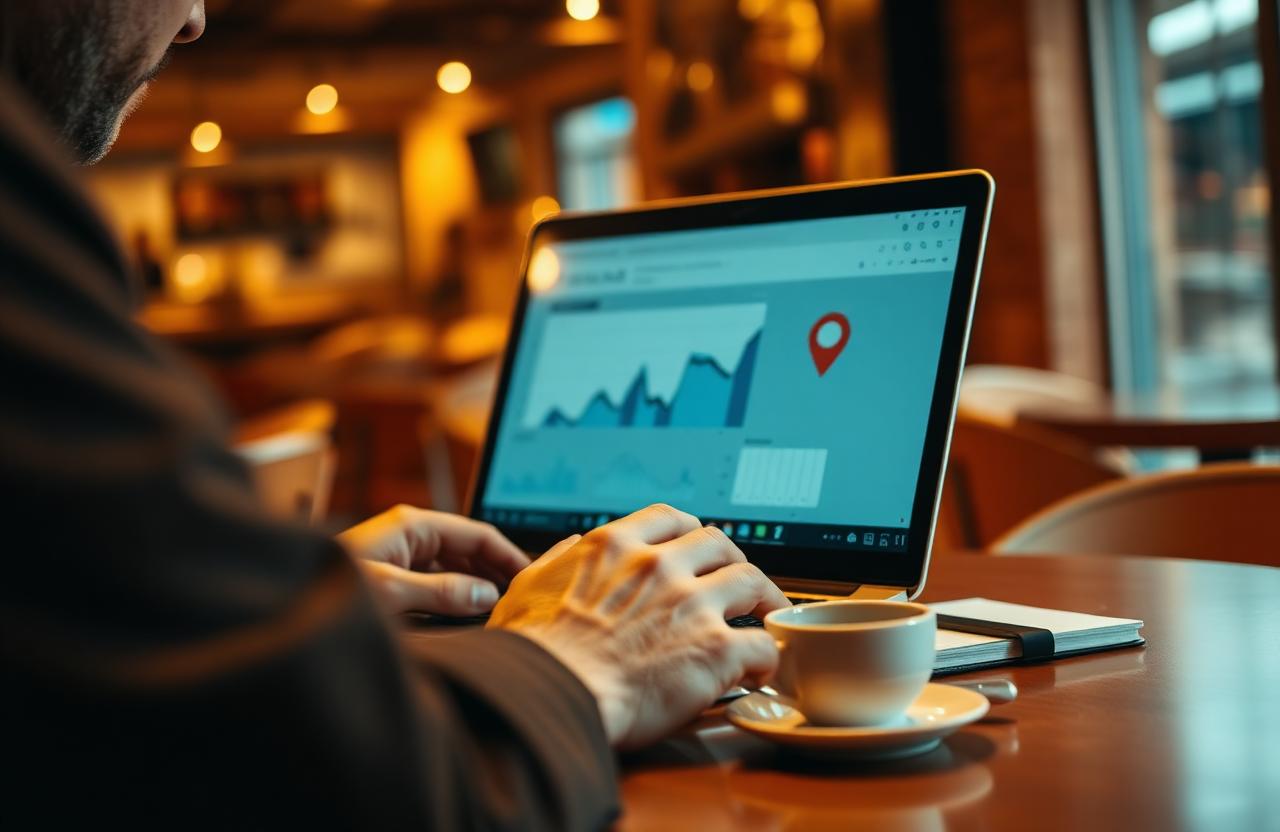
In audits of Dutch and Belgian hospitality businesses, I see almost weekly that the basics are still not right. Opening hours are not updated for holidays. The main category is too generic ("Restaurant" instead of "Italian restaurant" or "Wine bar"). Photos are outdated or only uploaded by guests. The menu is not added in Google format. Reservations lead to a 404 page on your old website. For every AI layer afterwards to be effective, start with this foundation. Without a polished Google Business Profile, no optimisation underneath it will work. Also see Google Ads for hospitality for how this foundation also reduces advertising costs.
Where AI specifically contributes to Google Maps optimisation
AI is not a magic trick to rank higher, but it is the best tool for consistently handling four time-consuming tasks well. First: generating and keeping photo and menu captions fresh in the languages of your guest mix. Second: monitoring and summarising new reviews with tone-of-voice suggestions for each response. Third: detecting keywords where you move in and out of the local pack and adjusting your listing accordingly. Fourth: automatically generating Google Posts (weekly updates valued by Google) based on your schedule, season and events. Together, these four deliver an average of 20-35% more direct profile views within three months.
Reviews: the heaviest weight in local rankings
Several local SEO studies by BrightLocal show that reviews are consistently the most heavily weighted external factor after proximity. For hospitality, there are three sub-factors: quantity (Google sees at least 50 reviews as a "sufficient signal"), average score (below 4.3 you see visible ranking damage), and freshness (at least one new review per week is the healthy minimum). AI can help here by proactively requesting reviews after a positive visit (via WhatsApp or email), and by responding quickly and professionally to both positive and negative reviews in the correct language. Also see improving Booking.com reviews for the parallel on OTAs.
The text fields where AI makes the difference
Google rewards hospitality listings that are informative without keyword stuffing. In practice: your "about us" text should be between 300 and 750 characters, written in natural language, with the most important keywords in the first two sentences. AI can generate variants of this text per language, test which drives better engagement (clicks, time spent on listing) and apply the winner. The same logic applies to your menu descriptions: "homemade tagliatelle with fresh Alba truffle" consistently performs better than "pasta with truffle". AI helps keep this level of richness consistent without requiring a staff member to spend an hour on it every week.
Photos: underestimated but a measurably strong signal
Google uses photo engagement as an indirect quality signal. Listings with more than 100 photos receive on average 42% more direction requests and 35% more phone calls than listings with fewer than 25 photos (BrightLocal benchmark data). AI can automatically tag existing photos (dish, atmosphere, exterior, team), generate captions in multiple languages, and detect which photos have become too outdated for the current season. Important: use real photos of your business, not AI-generated images. Google is becoming increasingly effective at detecting this and now penalises synthetic restaurant photos.
Google Posts: the underestimated weekly rhythm
Google Posts are the mini blog posts that appear in your Business Profile. Almost nobody in hospitality uses them, even though Google explicitly measures engagement through them. One post per week about a daily special, wine tasting, guest chef, seasonal menu or holiday menu sends a consistent signal that your business is active. AI can generate these posts based on your schedule and menu, and publish them in the correct languages. Restaurants that posted weekly for twelve consecutive weeks saw on average 18-30% more profile views, even without further optimisation.
Categories and attributes: the details that shift you by 3 positions
Your main category is one thing, but you can set up to nine subcategories. For a pizzeria: "Italian restaurant" as the main category, with "Pizzeria", "Delivery restaurant", "Restaurant with terrace", and "Family restaurant" as additional categories. Attributes (wheelchair accessible, child-friendly, vegetarian options, free Wi-Fi, dog friendly) shift your position for users filtering by those criteria. AI can automatically infer from your website, menu and reviews which attributes are correct and which are missing. This level of detail typically delivers a gain of 2-4 positions in the local pack, which is significant at high search volumes.
Structured data on your website: the bridge between Maps and Search
Google connects your Google Business Profile to your website via Schema.org structured data. For hospitality, the most important are: LocalBusiness or Restaurant, including address, telephone number, opening hours, menu, reservation link and reviews. AI can automatically generate and keep this structured data up to date when menus or opening hours change. Correctly implemented structured data gives your listing "rich snippets" (star ratings directly in the search result, price range indicators, menu items) that measurably increase click-through rates. Also see voice search and GEO for hospitality for the connection with voice searches.
What a realistic implementation timeline looks like
A full AI-supported Google Maps optimisation takes three to six weeks. Week 1: audit of the current Business Profile and competitors. Week 2: clean-up and completion of the basics (categories, attributes, opening hours, photos). Week 3: setting up a proactive review and review-response workflow. Week 4-5: Google Posts calendar and structured data on the website. Week 6: measurement and adjustments. After three months, the foundation is in place. The time investment is concentrated almost entirely in the first three weeks. Also see the implementation checklist for hospitality for the broader approach.
What it delivers in practical terms
A well-executed AI-supported optimisation delivers for most urban hospitality businesses 25-45% more profile views, 20-35% more direction requests and 15-30% more direct phone calls within six months. Translated into reservations, this often means 10-20% more spontaneous visits without additional advertising budget. For businesses in less competitive neighbourhoods, the gains are even larger; for top cities such as central Amsterdam, the gains are lower but still consistently positive. For the broader business case, see the complete AI customer service guide 2026.
Want a free local audit for your business? Book a no-obligation conversation via contact or view the pricing directly. Further reading: voice search and GEO for hospitality, improving Booking.com reviews and Google Ads for hospitality.
See HorecaHub.ai in your business
In 20 minutes we show live how our AI colleague handles calls, emails and chats from your guests.
Frequently asked questions
Sources
Read also
Written by

Martin Jurres
CCO of HorecaHub.ai
Driven by innovation and hospitality, Martin is building the commercial growth of HorecaHub.ai. With experience in sales, partnerships, and product demos, he translates AI technology into real value for hospitality entrepreneurs. His goal: to make every business run smarter, with less hassle and more profit. On this blog he shares hands-on lessons from conversations with hundreds of restaurants, hotels and cafés.
Topics