AI Customer Service Hospitality Germany: Market, Opportunities and Providers
The AI customer service hospitality Germany market is growing, but more slowly than many international providers expect. What the data shows, which segments are open to it, and where the biggest obstacles lie.
Anyone entering the German hospitality market as an international provider with an AI solution for customer service quickly discovers that scale and speed are not the same thing. Germany has one of the largest hospitality economies in Europe, yet the adoption of AI measurably lags behind the Netherlands, the United Kingdom and the Scandinavian countries. In this article we analyse the market structure, the segments with the highest willingness to buy, and the obstacles that are better recognised in advance than discovered along the way. We base this on figures from DEHOGA, Destatis, Eurostat horeca and industry analyses from Statista hospitality.
The size of the German hospitality market
According to DEHOGA, Germany has more than 220,000 hospitality businesses generating over 90 billion euros in revenue together. Restaurants, cafés, hotels and catering companies form a fragmented market with strong regional differences between urban areas such as Munich, Hamburg and Berlin, and the much larger hinterland with family-run businesses and regional chains.
What distinguishes the AI customer service hospitality Germany market
In the Netherlands it is common for a restaurant to start an AI pilot within one week of an initial introduction. In Germany the same step is more often a process of four to eight weeks, with more decision-makers, written preparation and an extensive trial period. This is not reluctance but a different purchasing culture: reliability and risk management weigh more heavily than speed of implementation.

Which segments are leading the way
Three segments show a measurably higher willingness to use AI. First: city hotels in the upper tier of the four-star category and above, especially those focused on international business travel. Second: chains with more than ten locations where centralising customer service immediately saves measurable costs. Third: fast-growing restaurant concepts in metropolitan regions where staff shortages are acute. For solo restaurants and small family businesses, the purchasing threshold remains high, regardless of price.
What German guests expect from AI communication
Research from Statista hospitality and consumer panels shows that German guests expect a measurably more formal tone than Dutch or American guests. The form of address "Sie" still dominates in business and hospitality communication across the vast majority of regions. AI that defaults to "du" is more quickly perceived as inappropriate. In addition, German guests value a clear route to a human contact person — an AI that handles this well scores higher than an AI that tries to resolve everything itself.
The role of GDPR and data storage
Germany applies a strict interpretation of the European GDPR along with additional federal legislation. Guests and business clients almost always ask about the location of data storage, the sub-processors involved and how long conversation and email data are retained. International providers who cannot give a clear answer quickly lose credibility in the initial exploration phase. A GDPR appendix with EU data storage and clear retention periods is not optional but a prerequisite.
Which PMS and POS systems dominate
The German market for PMS systems is more fragmented than in the Netherlands. Apaleo and protel are strongly represented among modern hotel chains, while Sihot, Suite8 and HS/3 have a large installed base in mid-market and family hotels. For restaurants, Vectron, Orderbird and GASTRO-MIS dominate the POS market alongside more recent cloud solutions. International AI providers that only integrate with Mews and Lightspeed cover only part of the market and must either build additional integrations or partner with local integrators.
Competition in the AI customer service hospitality Germany market
The German market includes several local players focused specifically on guest communication and reservation automation, alongside expansions from international providers. Competition is not so much about product features as it is about trust and local presence. A German-language support line, local reference customers and participation in trade fairs such as Internorga carry more weight for many German decision-makers than technical superiority.
Realistic scenarios for market entry
A realistic scenario for an international AI provider has three phases. Phase one, six months: build a solid German product experience (language, GDPR appendix, payment methods) and recruit three to five reference customers in a single segment, for example city hotels. Phase two, twelve months: build partnerships with local PMS and POS suppliers, participate in a trade fair and establish German-language support capacity. Phase three, ongoing: expand segment by segment without forcing a large national launch. According to Eurostat horeca, the German market grows steadily but gradually, rewarding patient development over hype-driven launches.
Common mistakes made by international providers
Three mistakes appear repeatedly. First: a direct translation of the international website without a formal form of address and German reference clients. Second: AI with a tone of voice that is too casual for German guests. Third: a sales process that applies pressure too quickly. German buyers want time to align internally, and an overly aggressive sales cadence is more likely to be perceived as untrustworthy than efficient.
What this means for HorecaHub
We approach the German market segment by segment, starting with city hotels and multi-location restaurants, and invest in local integrations and support capacity before expanding widely. Read our complete guide to hospitality automation, explore the AI chatbot solution, the AI phone solution and the pricing, or contact us for a conversation about the German market.
See HorecaHub.ai in your business
In 20 minutes we show live how our AI colleague handles calls, emails and chats from your guests.
Frequently asked questions
Sources
Read also
Written by
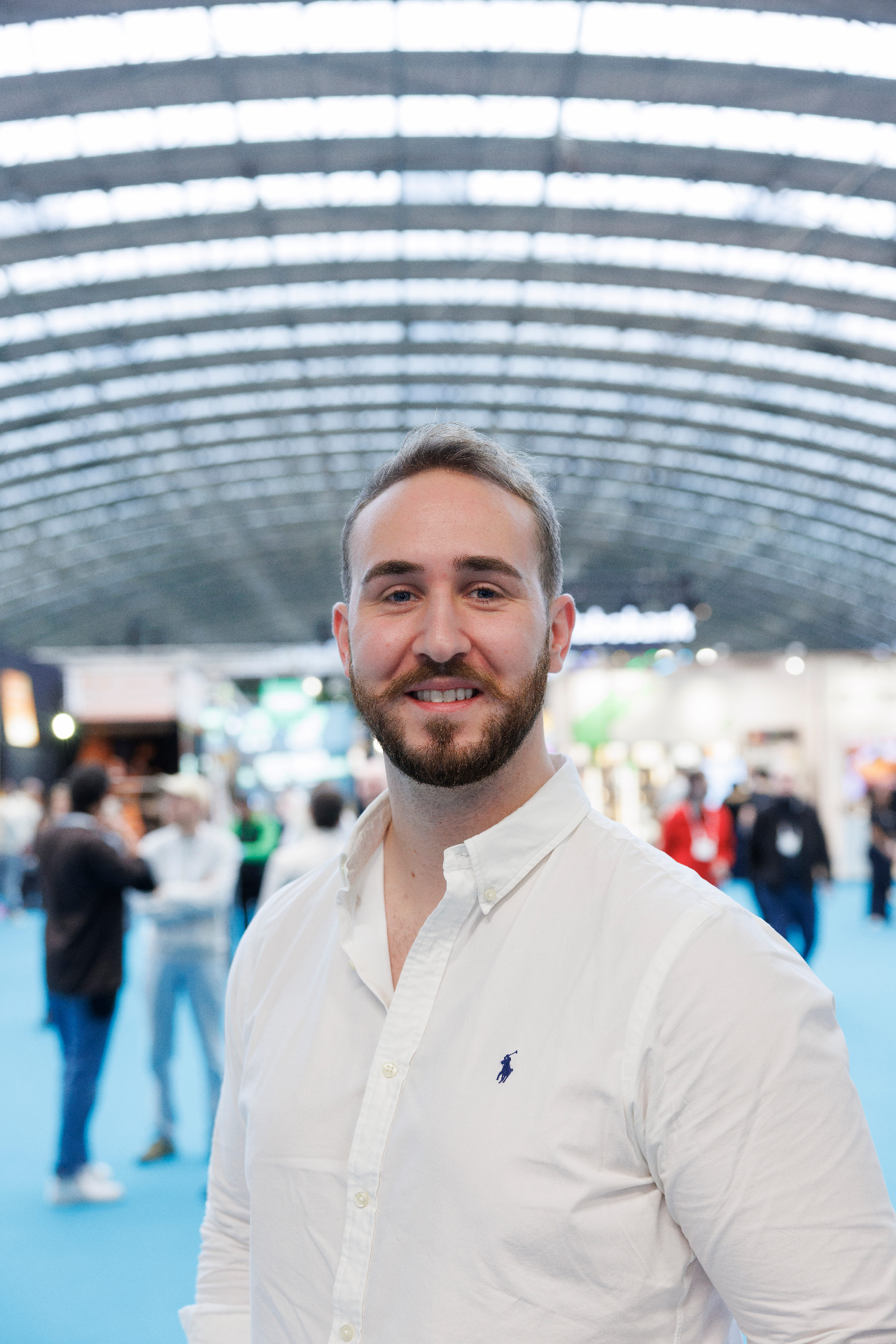
Martin Jurres
CCO of HorecaHub.ai
Driven by innovation and hospitality, Martin is building the commercial growth of HorecaHub.ai. With experience in sales, partnerships, and product demos, he translates AI technology into real value for hospitality entrepreneurs. His goal: to make every business run smarter, with less hassle and more profit. On this blog he shares hands-on lessons from conversations with hundreds of restaurants, hotels and cafés.
Topics