AI Upsell Scripts for Hospitality: How to Sell More Desserts and Drinks
AI hospitality upsell dessert drink package: five ready-made scripts for chat, email and table tablets that suggest desserts, wines and packages at the right moment.
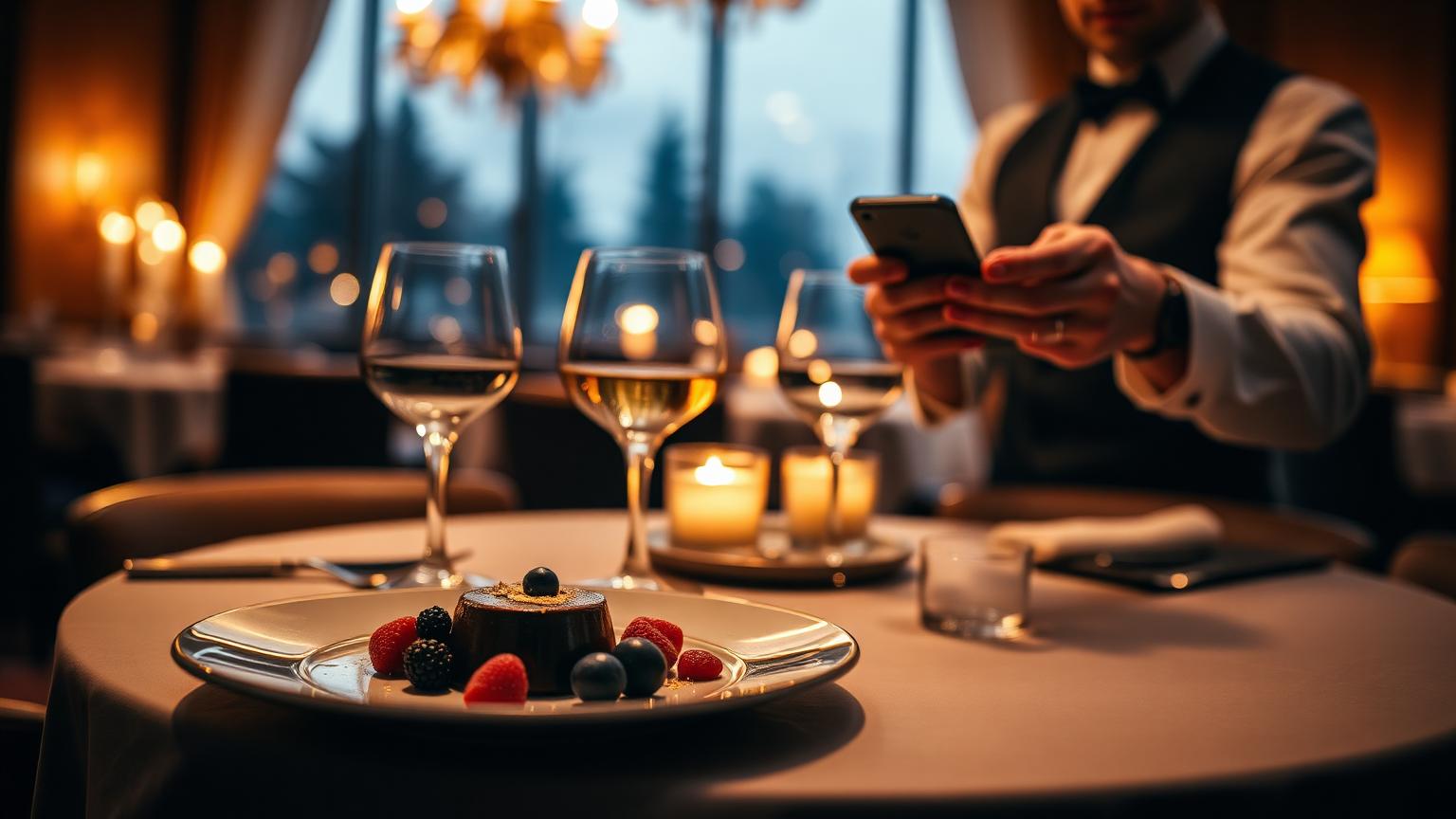
AI hospitality upsell dessert drink package sounds commercial, but in practice it is about something much simpler: making the right suggestion at the right moment. A guest who has just finished their main course is open to a dessert or digestif, but staff often lack the time or reminder to suggest it. AI fills that gap by providing ready-made scripts via chat, email or internal tablet that match the ordering moment and the guest.
Want the broader context? Also read the pillar AI email restaurant 2026, the blog Improve AI Booking.com reviews and Measuring AI customer satisfaction in hospitality.
Why AI upselling in hospitality works (and pushy selling does not)
According to research from Cornell Center for Hospitality Research, a well-timed suggestion increases the average spend by 8 to 14 per cent, while generic upsell training aimed at every guest actually lowers customer satisfaction. The difference: AI looks at signals (composition of the order, length of stay, channel, language, previous visits) and only delivers a suggestion when there is a genuine opportunity. Staff still decide, AI simply helps write the suggestion.
Script 1: dessert suggestion after the main course
Situation: guests have been seated for 40 minutes, main courses have been cleared, no dessert ordered, no coats on. The AI suggests a short sentence via the internal tablet that staff can say aloud or send via table chat:
"I noticed you have not yet tried the crème brûlée, our most shared dessert this evening. Shall I bring two spoons with it, or would you prefer to stick with coffee?"
The open question with an alternative (dessert or coffee) increases conversion because there is no opportunity for a simple "no". AI chooses the dessert with the lowest stock risk and the best margin/time profile at that moment.
Script 2: wine-food pairing during ordering
Situation: guest orders through the digital menu or QR menu and chooses a steak without wine. AI adds the following to the chat flow:
"Guests often enjoy a glass of our house Malbec or the Rioja Reserva with this steak. Would you like me to suggest one of the two at your table?"
The phrase "guests often" provides social proof without exaggeration. AI chooses between two options based on margin and stock. No five suggestions, no jargon. See how this fits into the broader AI marketing automation hospitality approach.
Script 3: pre-arrival package for hotel guests
Situation: hotel guest booked, staying in 3 days, no breakfast or dinner package included in the booking. AI sends an email 48 hours before arrival in the guest’s language:
"We are looking forward to welcoming you. Many guests staying for two days choose our breakfast-plus-dinner package (subject to availability). Would you like me to reserve it for you in advance, or would you prefer to keep your evenings flexible?"
Important: no pricing in the email (refer to prices via a link), but do offer the choice and convenience. AI also checks whether the restaurant still has capacity.
Script 4: high tea or shared platter invitation
Situation: booking for 4 to 6 people in the afternoon or early evening, no package selected. AI suggests the following block in the confirmation email:
"For groups of 4 or more, our shared platter or high tea is a great way to start; you can enjoy more flavours together without anyone having to choose. Would you like me to prepare a platter in advance?"
For groups, "enjoying together" works better than an individual upsell because the social dynamic speeds up the decision. AI only sends this for group bookings, not for tables of 2.
The role of industry benchmarks when setting things up
Before activating scripts, it helps to know your starting point. According to Koninklijke Horeca Nederland, the share of orders including dessert in a mid-range restaurant is between 22 and 34 per cent, depending on cuisine type and time of day. For drinks (aperitif plus digestif combined), the average is 41 per cent per cover. AI uses these figures as a reference: if your dessert share is already well above the industry average, AI automatically shifts the focus to wine pairing or packages instead of pushing desserts more aggressively. Similar insights are published by Skift hospitality research for hotel restaurants and boutique hotels, where package conversion is a stronger driver than individual table upsells.
Script 5: digestif or dessert wine at the end
Situation: dessert has been ordered and served, staff return for coffee orders. AI writes a short menu suggestion on the internal tablet:
"Our Ruby Port or a double espresso pairs beautifully with this chocolate mousse. Shall I bring one of the two for you?"
Two options, one alcoholic and one non-alcoholic, keep the suggestion inclusive. For guests who do not drink alcohol, this script does not feel awkward.
How to set up these scripts without custom development
You do not need to write scripts yourself; AI generates them based on your menu, your margins (which you enter once) and your brand tone (formal or more relaxed). The texts above are examples; in practice AI delivers a variation each time that matches the ordering moment. The AI email solution and the table chat work from the same brains, so the tone of voice remains consistent.
Measuring whether it works: which KPIs to track
According to Statista F&B trends, the most reliable measure of upsell effectiveness is the average spend per cover, not the conversion rate of individual suggestions. Track three figures: average spend week over week, share of orders including dessert or digestif, and customer feedback on whether "the service felt pushy" (in your post-visit review). If average spend rises and feedback remains stable, the scripts are working.
What AI does not do here (and why that is a good thing)
AI does not send suggestions without human review, does not spam multiple upsell moments in one evening, and does not push high-margin items when the guest is already spending well above average. According to the Guest Experience Association, exceeding two suggestions per visit is a strong predictor of lower review scores. AI is therefore strictly limited to a maximum of two upsell moments per cover.
Multilingual support: every guest in their own language
Dutch guests receive an informal suggestion, Italian and French guests a formal one (Lei/vous), German guests the Sie form. The content stays the same, while the tone matches cultural expectations. For international audiences (hotels, seaside resorts), this difference matters more than it seems: a formal French guest will not respond well to an informal Dutch tone translated into French.
Privacy and guest data
The AI reads ordering patterns to make suggestions, but does not store individual customer profiles outside your own environment. This aligns with our DPA v1.2: no data sales, no AI model training on customer data, zero-data retention. Also view our terms.
Get started
Want to know which upsell scripts work for your restaurant or hotel? Schedule a short introduction via contact or view prices. For more depth: the AI email solution, the blog Improve AI Booking.com reviews, or the pillar AI email restaurant 2026.
See HorecaHub.ai in your business
In 20 minutes we show live how our AI colleague handles calls, emails and chats from your guests.

Frequently asked questions
Sources
Read also
Written by

Martin Jurres
CCO of HorecaHub.ai
Driven by innovation and hospitality, Martin is building the commercial growth of HorecaHub.ai. With experience in sales, partnerships, and product demos, he translates AI technology into real value for hospitality entrepreneurs. His goal: to make every business run smarter, with less hassle and more profit. On this blog he shares hands-on lessons from conversations with hundreds of restaurants, hotels and cafés.
Topics